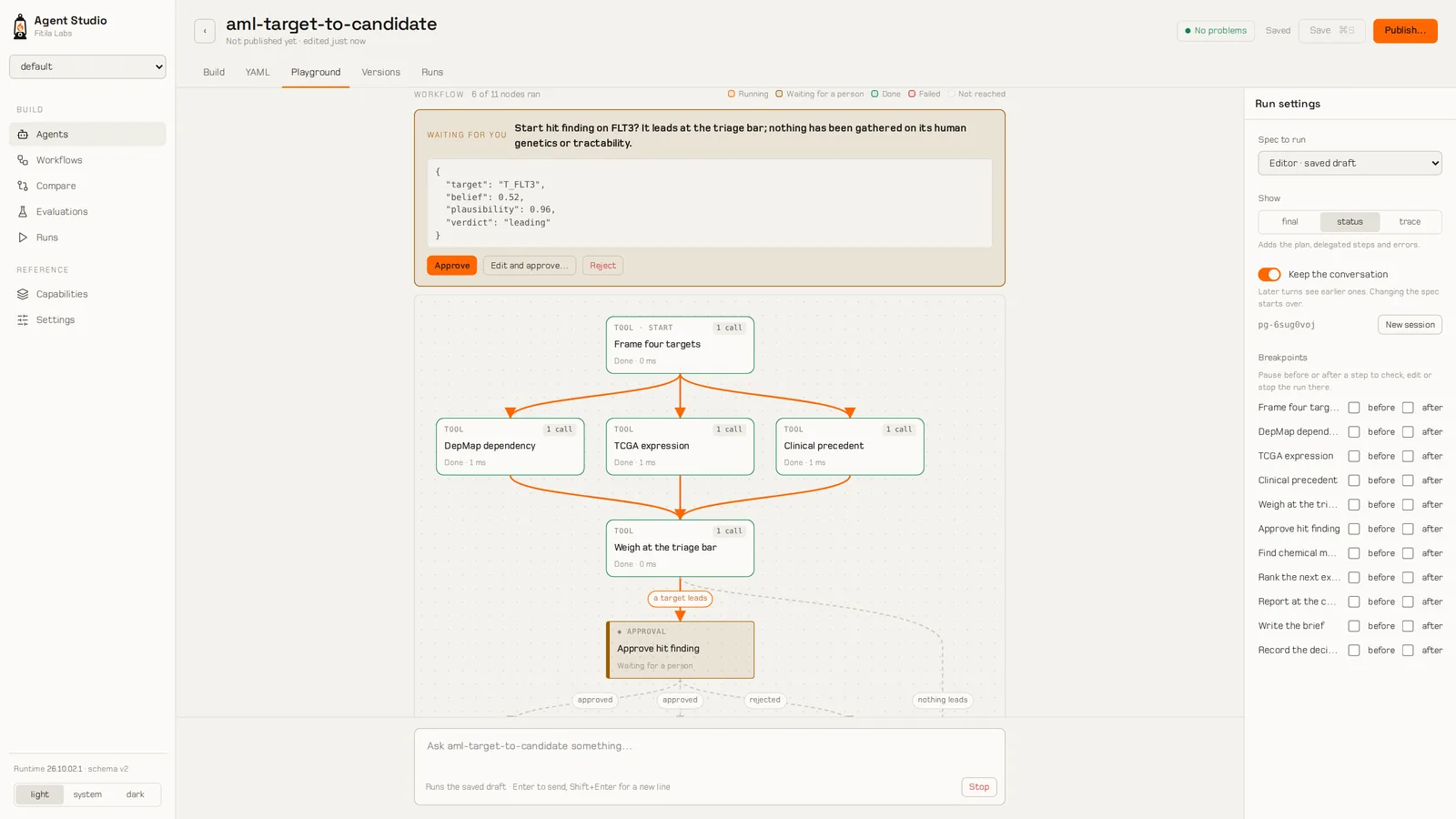
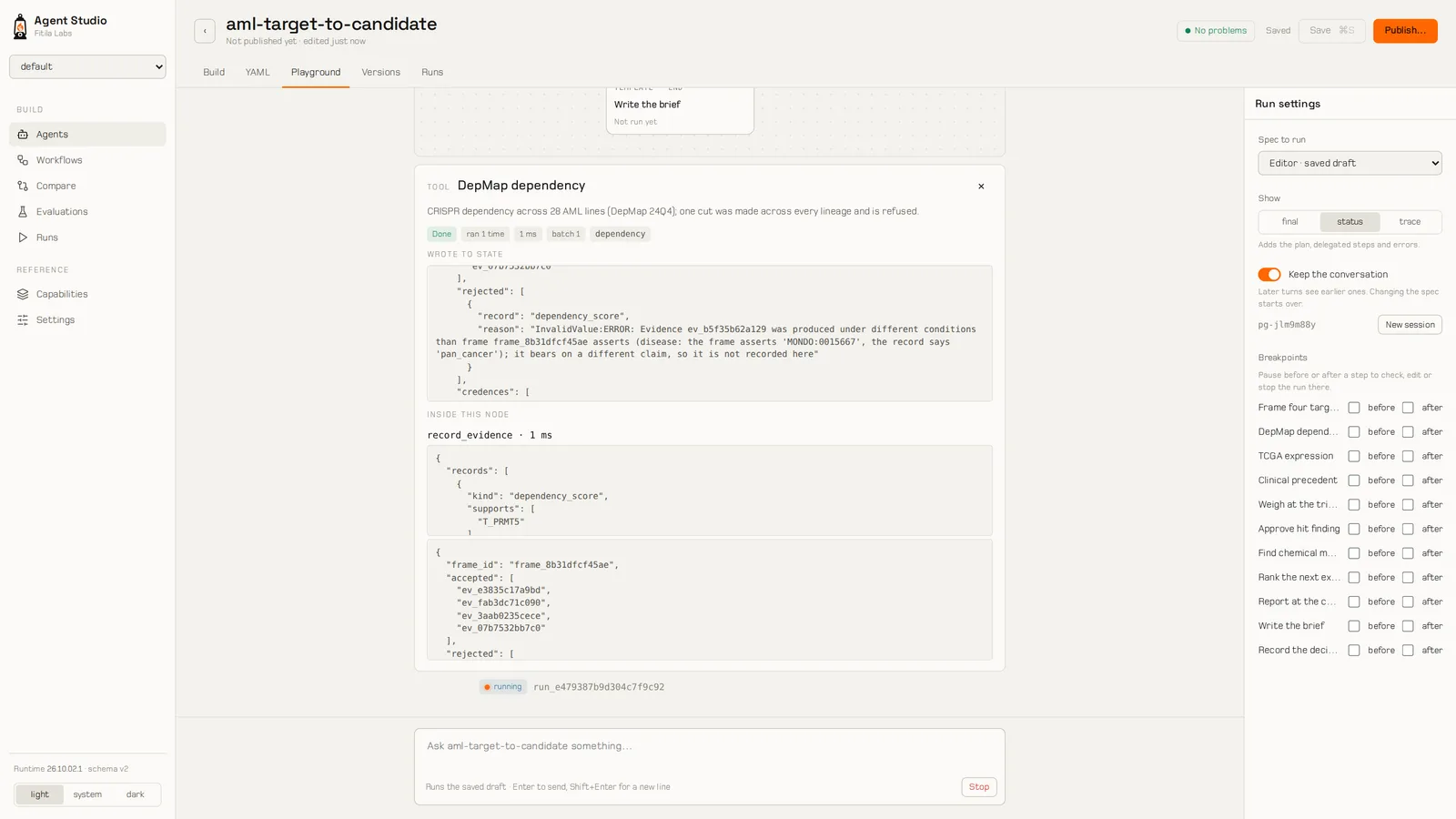
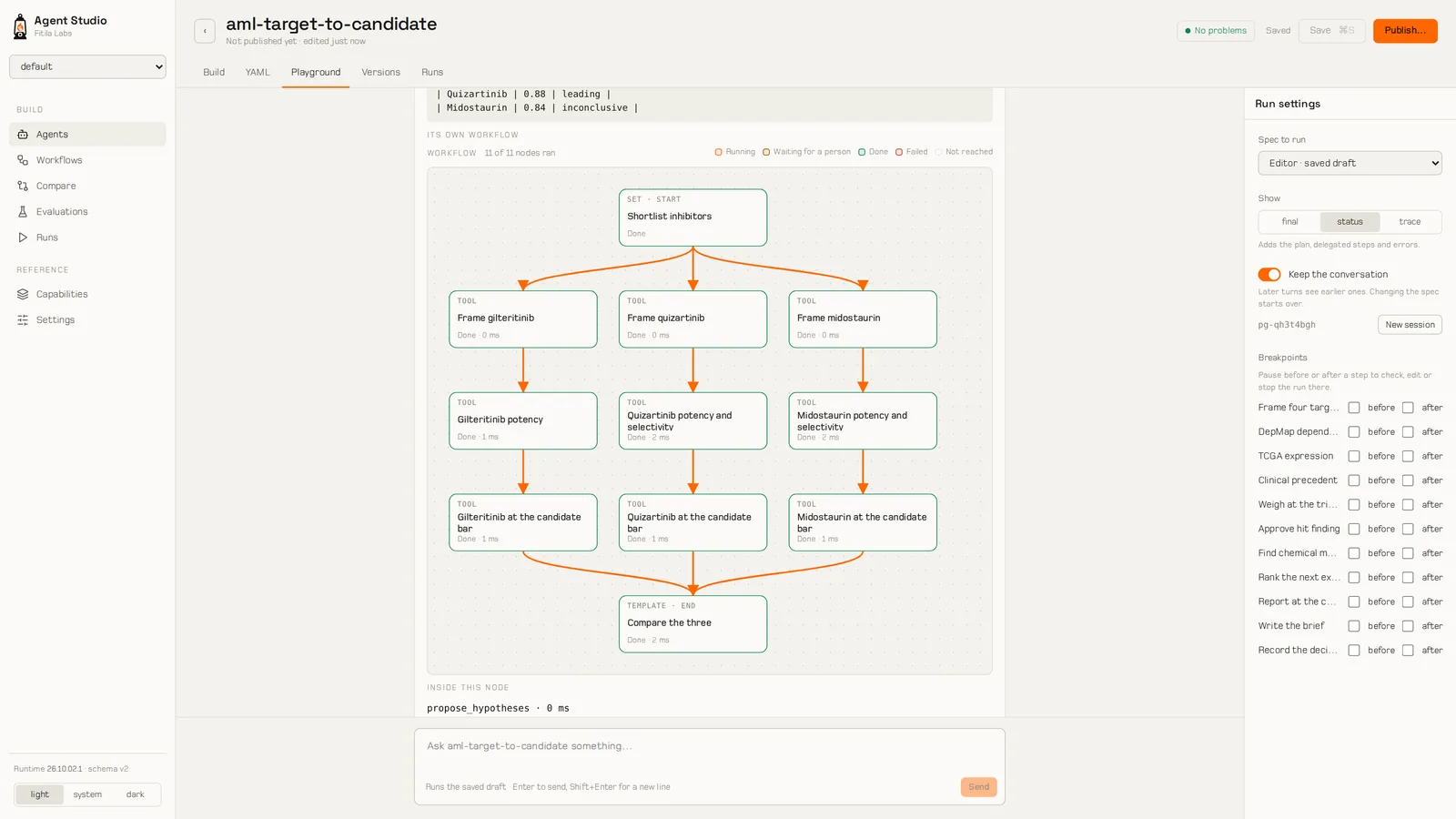
hypothesis_evidenceFrames a question as competing hypotheses, each with a way to confirm or refute it, plus one that absorbs evidence fitting none. The model chooses what to gather; an evidential core turns each observation into belief by Dempster–Shafer combination. Dependent sources count once, conflict between sources is reported, and evidence used to find a hypothesis is not used to confirm it. The result is a verdict (credible, leading, inconclusive, high conflict or frame incomplete), with belief and plausibility for each hypothesis and the next measurement ranked by how much uncertainty it would remove per unit of cost.
model_discoveryTreats rival model structures as hypotheses, with a null structure always among them. Fits every candidate in one call, ranks them by Akaike weight, audits whether each one's parameters can be pinned down at all, and scores them on rows held out from fitting. When the leaders can't be separated, it reports the ensemble and names them all.
Hierarchical task network
htnRuns an established procedure. The procedure is a task library: compound tasks expand until every step is a primitive bound to a tool. A task outside the library is decomposed by the model, but only into the library's own primitives. Ships with domains for oil-and-gas asset evaluation and for drug discovery.
Probabilistic graphical models
pgmFor questions with calibrated conditional probabilities and a closed set of variables: Bayesian networks, Markov networks, dynamic Bayesian networks and influence diagrams. On an influence diagram, the best decisions become the plan. Ships with specifications for drug-target validity, a drug-discovery funnel and a subsurface reservoir.
belief_stateTracks a belief over a hidden state as a partially observable Markov decision process, and chooses actions by Q-MDP when a reward is declared. For sequential decisions where the state is never seen directly.
reinforcement_learningRuns a policy trained offline on a declared environment, one action at a time. Ships with environments for subsurface operations and energy trading.
And the general strategies: ReAct, ReWOO, plan-and-execute, tree of thought, dynamic replanning, code actions and collaborative planning across remote agents.